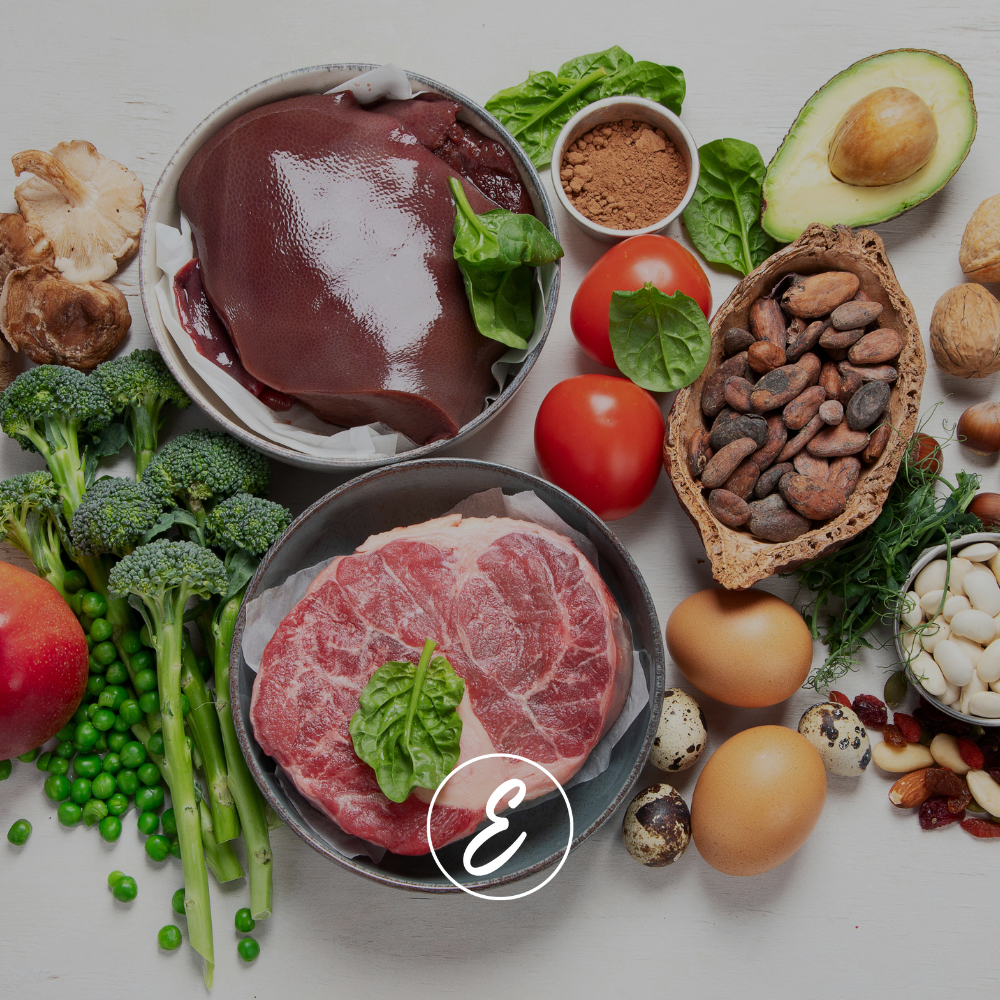
Iron is one of the most essential minerals for women — yet it’s also one of the most commonly overlooked in midlife. While periods may become lighter or stop during perimenopause and menopause, many women still don’t get enough iron to support energy, focus, and overall health.
🩸 Why Iron Matters
Iron plays a crucial role in:
- Carrying oxygen around the body (via red blood cells).
- Supporting energy levels and reducing fatigue.
- Maintaining concentration and brain clarity.
- Strengthening immunity so you can fight off illness.
When your stores are low, everything from energy to mood can feel flat.
⚠️ Signs You May Be Low in Iron
- Constant tiredness, even after rest
- Pale skin or dark circles under the eyes
- Shortness of breath after light activity
- Headaches or dizziness
- Brittle nails or hair thinning
- Cravings for ice or non-food items (in severe cases)
🍳 Best Food Sources of Iron
There are two main types of iron:
- Haem iron (easily absorbed): Found in lean red meat, chicken, turkey, and fish.
- Non-haem iron: Found in beans, lentils, spinach, silverbeet, pumpkin seeds, and fortified cereals.
👉 Pair non-haem iron with vitamin C-rich foods (like citrus, tomatoes, or capsicum) to boost absorption.
🥗 Everyday Iron-Rich Meal Ideas
- A beef and lentil bolognese with hidden veg.
- Spinach and chickpea curry served with rice.
- Grilled salmon with a fresh garden salad.
- Roast lamb with pumpkin and leafy greens.
- Snack on pumpkin seeds, boiled eggs, or hummus with veggie sticks.
🌿 Midlife & Iron Needs
Even though blood loss from menstruation decreases, midlife women still need to prioritise iron. Gut health, dietary changes, or reduced appetite can all affect absorption. And for many, fatigue is simply put down to “getting older” — when low iron could be a major factor.
✅ Final Thought
Iron is too important to ignore. By being mindful of food choices — and combining iron-rich ingredients with supportive gut health habits — you can maintain steady energy and support your body through midlife and beyond.
If you’re concerned about iron levels, speak with your GP or request a blood test to check your stores.