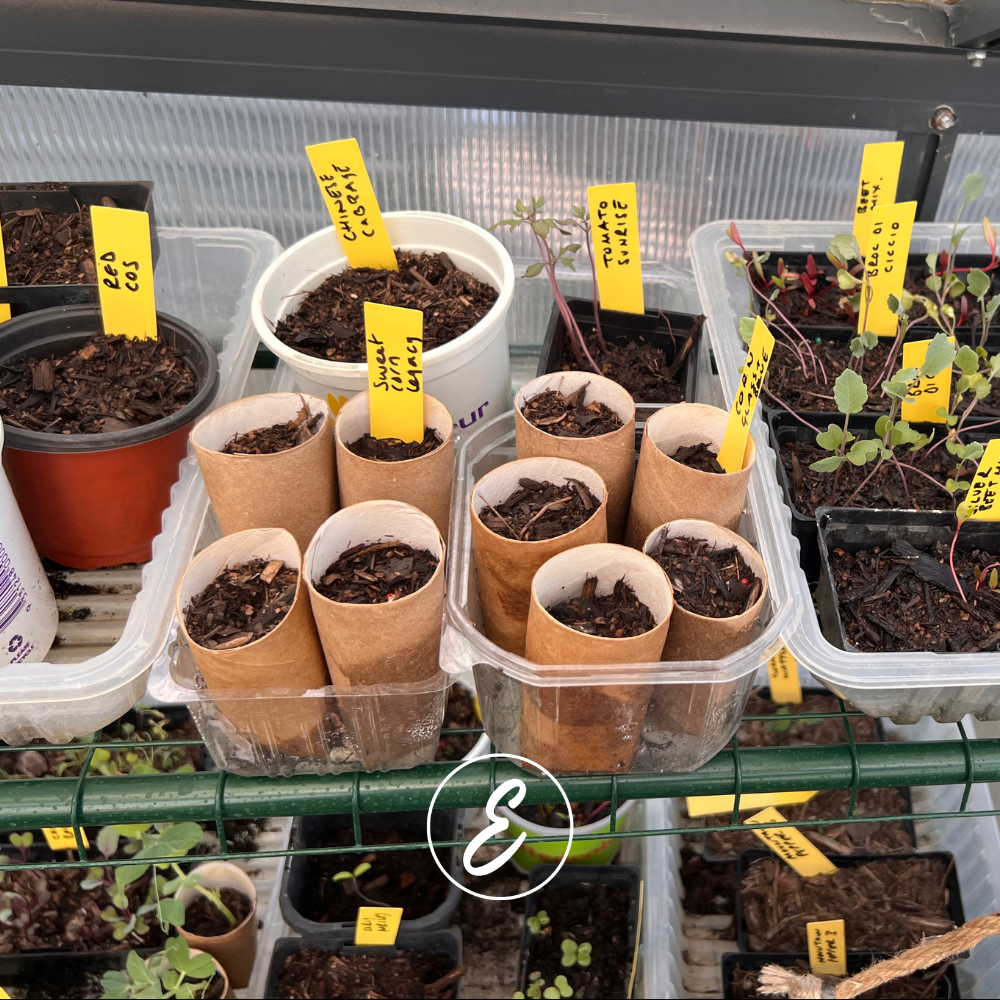
The useful seeds to buy, grow, save and keep for a more resilient kitchen garden.
A seed is a tiny thing to place so much hope in. It can sit quietly in an envelope for months and then, with soil, water and the right conditions, turn into kilos of food.
That makes seeds one of the most valuable things we can keep—but only if we choose them well. A drawer filled with expired packets, unsuitable varieties and vegetables nobody eats is not a seed bank. It is a collection of good intentions.
The most valuable seeds are not necessarily rare, fashionable or expensive. They are the ones that grow reliably in your conditions, produce food your household uses and, where possible, allow you to collect seed for another season.
Start with what your family eats
Before buying anything, list the vegetables and herbs you purchase most often. Then mark which are expensive, highly perishable or noticeably better when freshly picked. Those crops usually offer the greatest return from limited garden space.
For many families, herbs, leafy greens, tomatoes, beans and zucchini earn their place because they are picked repeatedly or used in many meals. A large pumpkin harvest can be wonderfully useful too, but only if your family eats pumpkin. Resilience is personal.
Seeds I would prioritise
The precise list will change with climate and season, but these groups give a productive home garden a strong foundation. Always use local sowing guidance and adjust for frost, heat, rainfall and the small weather system that seems to exist in your own backyard.
Beans and peas
Climbing beans can produce generously from a narrow footprint, while dwarf beans are useful in beds and containers. Peas provide shoots, pods and, if allowed to mature, seed for the following season. Both bring vertical structure to a garden and can be eaten fresh, cooked, frozen or preserved by suitable methods.
Choose open-pollinated varieties if you hope to save seed. Let selected pods mature fully and dry on healthy plants, then finish drying them somewhere protected before storage.
Leafy greens
Kale, silverbeet, spinach alternatives, Asian greens and lettuces can provide repeated harvests rather than a single crop. Cut-and-come-again varieties are particularly valuable for a family kitchen because you can take what you need and allow the plant to continue growing.
Keep more than one kind. A lettuce that thrives in a cool spring may bolt quickly in warmer weather, while kale or silverbeet may carry the garden through less cooperative conditions.
Tomatoes
Tomatoes are useful fresh, cooked, frozen, dried and turned into sauces or relishes. Small tomatoes often crop generously for lunch boxes and salads; paste-style tomatoes are valuable for preserving; and a dependable slicing tomato earns its place at the family table.
Tomatoes are generally straightforward to save seed from, but separate varieties where cross-pollination is a concern and follow a reliable fermentation and drying method before storing seed.
Pumpkins and winter squash
Pumpkins turn summer space into food that can keep well beyond harvest when fully mature, properly cured and stored in suitable conditions. They can become soup, curry, mash, baking, pasta filling and roasted sides.
They do sprawl, and varieties within the same species may cross readily. If true-to-type seed saving matters, learn which plants can cross before assuming the seeds from one impressive pumpkin will produce the same result next year.
Zucchini and summer squash
A healthy zucchini plant can be comically productive, which is exactly what makes it valuable. Use young fruit in fritters, pasta, curries, tray bakes and cakes; grate and freeze surplus for later cooking.
One or two productive plants may be enough for a household. Planting twelve is less food security and more an elaborate plan to lose friends.
Root vegetables
Carrots, beetroot, radishes and turnips convert underground space into useful food. Radishes mature quickly, while carrots and beetroot can stay in the ground for a time depending on conditions. Beet leaves are edible too, giving you more than one harvest from the same plant.
Root vegetables are often best direct-sown because many dislike transplanting. Good soil preparation matters more than buying a glamorous variety.
Onions, leeks and spring onions
The onion family forms the flavour base of countless meals. Spring onions offer quick, repeated use; leeks stand well in cool weather; and suitable storage onions can last beyond harvest when cured properly.
Seed can lose vigour faster than some other vegetables, so buy fresh seed regularly rather than relying on a very old packet when the crop matters.
Herbs
Parsley, coriander, basil, dill, oregano and chives make basic food taste alive. They are expensive to buy repeatedly, often sold in more plastic than herb, and easy to harvest in exactly the amount needed.
Let a few healthy plants flower. The pollinators will benefit, and you may be able to collect seed. Coriander provides both leaves and seeds; dill flowers support beneficial insects; and perennial herbs can reduce the amount you need to sow each year.
Fast crops and gap fillers
Radishes, baby leaf mixes, rocket and quick Asian greens help fill short gaps between larger crops. They are useful when a bed will be empty for only a few weeks or when you need a psychological victory after a season of slugs, rabbits and weather-related betrayal.
Open-pollinated, heirloom and hybrid: what matters?
Open-pollinated varieties can produce seed that broadly resembles the parent when plants are grown and saved carefully. Heirloom varieties are open-pollinated varieties with a longer history, often maintained for flavour, local adaptation or cultural significance.
Hybrid seed is produced from controlled crosses. Hybrids can offer excellent vigour, uniformity or disease resistance, and there is nothing inherently wrong with growing them. The limitation is that saved seed may not reproduce the same characteristics reliably.
A resilient seed collection can include both. Use reliable hybrids where their performance genuinely helps, and keep open-pollinated varieties for crops you would like to save and adapt over time.
How to store seeds
Seed longevity varies by species, and storage conditions matter enormously. As a general rule, keep seeds cool, dry, dark and protected from insects and rodents. Moisture is the enemy.
Leave seeds in labelled packets or transfer them to clearly labelled envelopes, then place them inside an airtight container with a food-safe desiccant if appropriate. Record the variety and year. If refrigerating seeds, prevent condensation by allowing the sealed container to return to room temperature before opening it.
Check older seed with a simple germination test: place a counted sample on damp paper, keep it under suitable conditions and see how many sprout. A low result does not always mean the packet must be discarded; you may simply need to sow more thickly.
Seed saving is a skill, not just a harvest
Save from healthy, vigorous plants—not the weak plant you forgot to pick. Allow seed to mature fully, dry it thoroughly and label it immediately. Learn whether the crop is self-pollinating or likely to cross with nearby relatives, and save from enough plants to maintain useful diversity.
Start with easier crops such as peas, beans, lettuce and tomatoes before tackling biennials or plants that cross readily. Every successful batch teaches you something about your garden that no catalogue can.
Build a seed collection slowly
A useful seed supply does not require hundreds of packets. Begin with ten dependable crops, store them well and record what happens: sowing date, germination, weather, pests, harvest and whether the family actually ate the result.
Over time, your most valuable seeds will become obvious. They will be the beans that cope with your wind, the tomato that continues through an awkward summer and the lettuce that does not surrender at the first warm afternoon.
Those seeds are worth more than their price because they come with knowledge—and knowledge is the part of a garden you can carry into every season.
Part of The Resilient Pantry series by At Home with Mrs E.