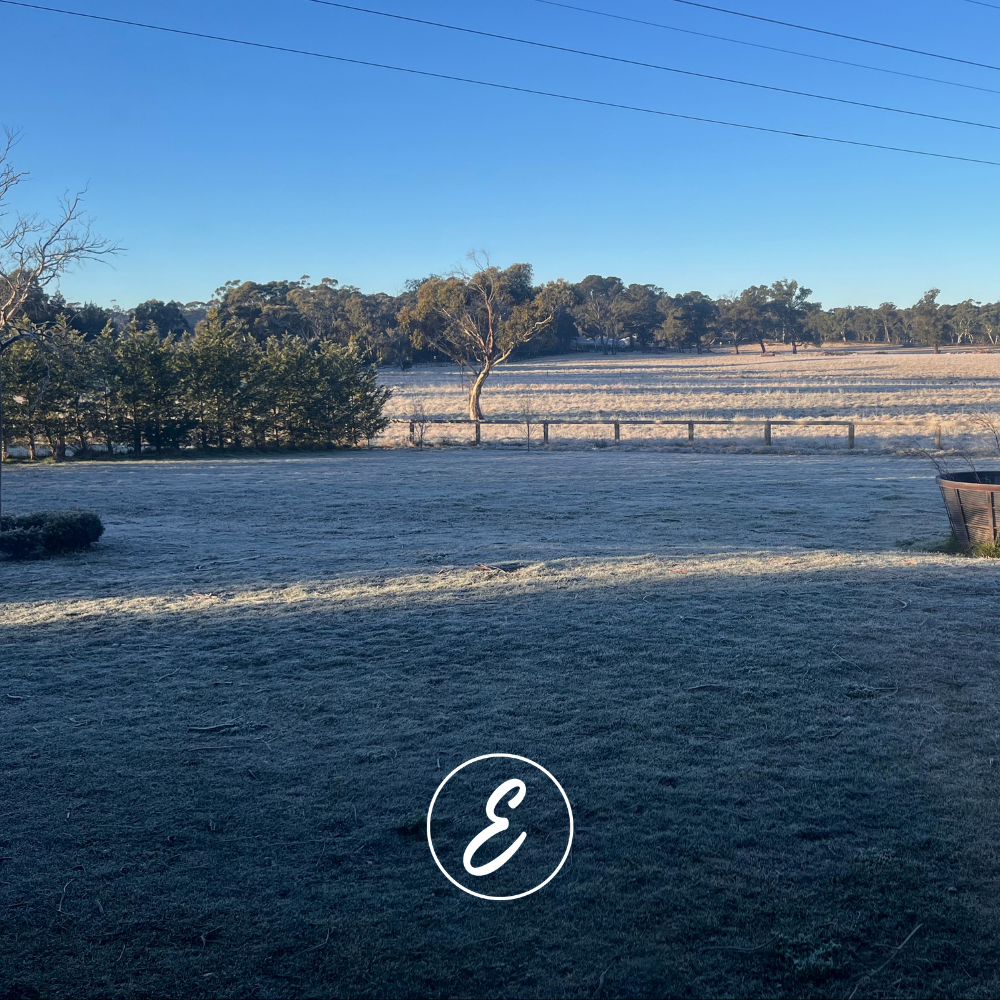
It is 1 August, which means we officially have just one month of winter left.
That sounds enormously encouraging until you live in a frost-prone garden and remember that the calendar and the weather rarely consult one another.
Here in the Southern Highlands of New South Wales, August is not the month when I confidently plant tomatoes outside and declare spring underway. We can continue to experience heavy frosts well beyond the official end of winter—sometimes into October.
For me, August is a month of cautious optimism.
The days are gradually becoming longer. The greenhouse is beginning to feel more productive. Seeds can be started, beds can be prepared and the winter garden still has plenty to offer.
But the frost covers are not being packed away just yet.
Here is what I’m doing in my garden this month—and what you can still do if winter has slipped past without quite as much gardening as you intended.
First, a Quick Update From the Rabbit Underground
If you didn’t see my last garden post, the rabbits have designed an underground metro system into one of my raised beds.
This isn’t one rabbit squeezing through an opportunistic gap. They have tunnelled underneath the bed and created what appears to be a well-planned transport network with multiple access points and, presumably, a peak-hour service.
I am gradually emptying the bed so that I can add strong wire mesh underneath it before replacing the soil.
It is not a quick job, but I would rather fix the problem properly than continue providing the local rabbit population with an elevated, fully catered dining room.
People often suggest planting garlic, onions, rosemary, sage or other strongly scented plants to discourage rabbits. Unfortunately, mine eat nearly all the usual plants they are allegedly meant to dislike. They are either unusually determined or have not read the same gardening advice.
So far, physical barriers appear to be the most reliable option.
For the rebuilt bed, I’m considering:
- strong galvanised wire mesh across the entire base;
- mesh extending beyond the bed edges if possible;
- checking carefully for gaps where the bed meets the ground;
- repairing the surrounding rabbit fencing;
- protecting young plants with individual mesh covers; and
- removing nearby hiding places where practical.
If you garden with extremely determined rabbits, I would love to hear what has genuinely worked for you. Is under-bed mesh enough, or is there something else I should add while the bed is empty?
Please send your ideas before they complete the interchange.
August Is Still a Good Month for Winter Vegetables
If you haven’t planted much this winter, you haven’t missed your opportunity completely.
In a cool or frost-prone garden, you can still grow or establish cold-tolerant vegetables such as:
- spinach;
- kale;
- silverbeet;
- lettuce;
- rocket;
- mustard greens;
- peas and snow peas;
- broad beans;
- spring onions;
- leeks;
- broccoli;
- cauliflower;
- cabbage;
- beetroot;
- carrots; and
- radishes.
Exactly what succeeds will depend on your local conditions, soil temperature and how protected your garden is.
Seeds will germinate and plants will grow more slowly in cold soil, so I use the greenhouse and heat mat to give some plants a head start. A sunny windowsill, cold frame or simple covered seed tray can also provide a more protected environment.
Gardening Australia recommends winter crops including onions, garlic, broad beans, cabbage, cauliflower and broccoli for cool conditions. These plants may tolerate cold weather, but small seedlings can still benefit from protection while they establish.
You can read more about preparing and planting a winter garden through Gardening Australia.
What Is Still Growing in My Garden
Despite the frost, rain, rabbits and general winter gloom, the garden is producing.
My winter vegetables currently include kale, leeks, broad beans, celery, broccoli, cauliflower, spinach and other leafy greens in various stages of enthusiasm.
Some are doing beautifully. Others are alive, which is occasionally the winter gardening standard we must accept.
My black Tuscan kale is always a favourite, although the blue kale is coming towards the end of its useful life. The broccoli has been engaged in ongoing negotiations with the snails, and I currently have one rather closely supervised cauliflower.
The leeks and celery are continuing to grow, while the greenhouse gives me somewhere to raise more vulnerable seedlings without leaving them entirely at the mercy of the overnight temperatures.
This is one of the things I like about winter gardening: it encourages you to notice every bit of progress.
A new leaf in summer can disappear into the general abundance. A new leaf in August feels like a personal achievement.
Start Seeds—but Know Where They Will Live
August is a useful time to begin thinking ahead to spring and summer, particularly if you have somewhere protected to raise seedlings.
I can start seeds on the heat mat and move them into the greenhouse as they become established. This provides a much longer and gentler transition than sowing warmth-loving plants directly into cold outdoor soil.
Depending on your climate and growing space, you might begin sowing protected crops such as:
- tomatoes;
- capsicums;
- chillies;
- eggplants;
- basil; and
- early flowers for beneficial insects and pollinators.
The important word is protected.
Starting a tomato seed in August does not mean planting the seedling outdoors two weeks later. Warm-season seedlings may need to remain inside, in a greenhouse or under cover until both frost risk and soil temperatures improve.
Before sowing trays of anything, ask yourself:
Where will these plants live for the next two or three months?
Seed packets have a remarkable ability to create enthusiasm without providing any additional greenhouse shelving.
Keep Harvesting Your Winter Greens
Winter greens are not merely placeholders until the tomatoes return.
Kale, spinach, silverbeet, mustard greens and other leafy vegetables can become the foundation of warming, substantial meals.
Harvesting outer leaves regularly encourages many leafy plants to continue producing. Take what you need while leaving enough healthy growth for the plant to recover.
Fresh winter greens can be added to:
- pasta;
- soups;
- curries;
- stews;
- omelettes;
- frittatas;
- pies;
- grain bowls; and
- warm salads.
If your garden is producing kale or other sturdy greens, try my Kale and Garlic Pasta. It is simple, warming and an excellent way to turn a generous handful of garden greens into dinner.
My Winter Green Giant Quiche is another useful option when several different leafy vegetables are ready at once. You don’t need one perfect bunch of anything—use the mixture your garden gives you.
That is very much how I like to cook: begin with what is growing, then work out what it can become.
Prepare Empty Beds for Spring
August is an excellent month for bed preparation because you can improve the soil before the main spring planting rush begins.
Where beds are empty—or being forcibly emptied due to rabbit infrastructure—I am:
- removing weeds and unwanted grass;
- checking for tunnels and pest damage;
- adding compost or well-rotted organic matter;
- inspecting bed edges and supports;
- improving drainage where water has pooled;
- planning crop positions; and
- covering exposed soil.
Avoid digging or working very wet soil. It can damage the soil structure and create compacted clumps that are difficult to correct later.
If the ground is sodden, wait. There will always be another gardening job. In my case, several hundred of them.
Check Mulch Before You Spread It
I recently used old hay as an economical mulch around my potatoes.
It was readily available, it would protect the soil and it seemed far too useful to waste.
Unfortunately, it also contained grain heads and began enthusiastically growing its own crop of grass. Instead of suppressing weeds, I had installed a lawn.
I have now removed the sprouting hay and will use materials less likely to germinate, such as clean straw, compost, aged leaves or another seed-free mulch.
This does not mean all hay is unsuitable, but it is worth checking what it contains before spreading it over an entire bed. Frugality becomes considerably less satisfying when you spend the following weekend hand-pulling wheat.
Plant Bare-Rooted Trees and Prune With Care
While deciduous trees and roses are still dormant, there may still be time to plant bare-rooted varieties suited to your climate.
This can also be a useful time to:
- remove dead or damaged branches;
- check tree guards and ties;
- prune established berries where appropriate;
- inspect fruit trees for disease or damage; and
- plan new orchard or berry areas.
However, I am cautious about cutting frost-damaged growth from tender plants too early. Old growth can provide some protection to the new shoots below it, and pruning can encourage fresh growth at exactly the wrong time.
In a frost-prone garden, spring cleaning sometimes needs to wait until spring genuinely arrives.
Protect Plants From Late Frosts
The end of winter does not mean the end of frost.
Continue watching local forecasts and protect vulnerable plants when cold nights are expected.
Depending on the plant and the severity of the frost, protection might include:
- frost cloth;
- cloches;
- overturned pots or boxes overnight;
- moving containers into a greenhouse or sheltered area;
- keeping seedlings away from exposed low points;
- mulching around roots; and
- watering appropriately before a frost rather than leaving plants severely dry.
Remove or open temporary covers during the day so plants receive light and airflow, and make sure the covering is secured against August winds.
Tender new growth is particularly vulnerable, so there is no prize for encouraging it outdoors too early.
Take Stock Before the Spring Rush
August is also a good month to look rather than plant.
Notice:
- where frost lingers longest;
- which beds receive the most winter sun;
- where water collects;
- which plants handled the cold;
- where pests entered;
- what your household actually ate; and
- which crops you grew far too much—or nowhere near enough—of.
These observations are more valuable than following a generic planting calendar without considering your own garden.
This winter has taught me more about drainage, frost pockets, greenhouse space, germinating hay and rabbit engineering than I necessarily wanted to know.
But each problem also helps shape the larger productive garden I am gradually building.
You Haven’t Missed the Growing Season
If your winter garden never quite happened, don’t write the season off.
You can still:
- sow quick leafy greens;
- plant cold-tolerant seedlings;
- start warm-season seeds under protection;
- prepare beds;
- improve soil;
- inspect fences;
- plant bare-rooted trees;
- tidy the greenhouse;
- organise seeds; and
- make a realistic spring plan.
You do not need to transform the entire garden before September.
Choose one bed. Sow one tray. Repair one gap. Harvest something already growing and turn it into dinner.
August is a month of small beginnings beneath cold soil. The garden may still look quiet, but spring preparations are already underway.
Just don’t tell the tomatoes—or the rabbits—that spring is coming.