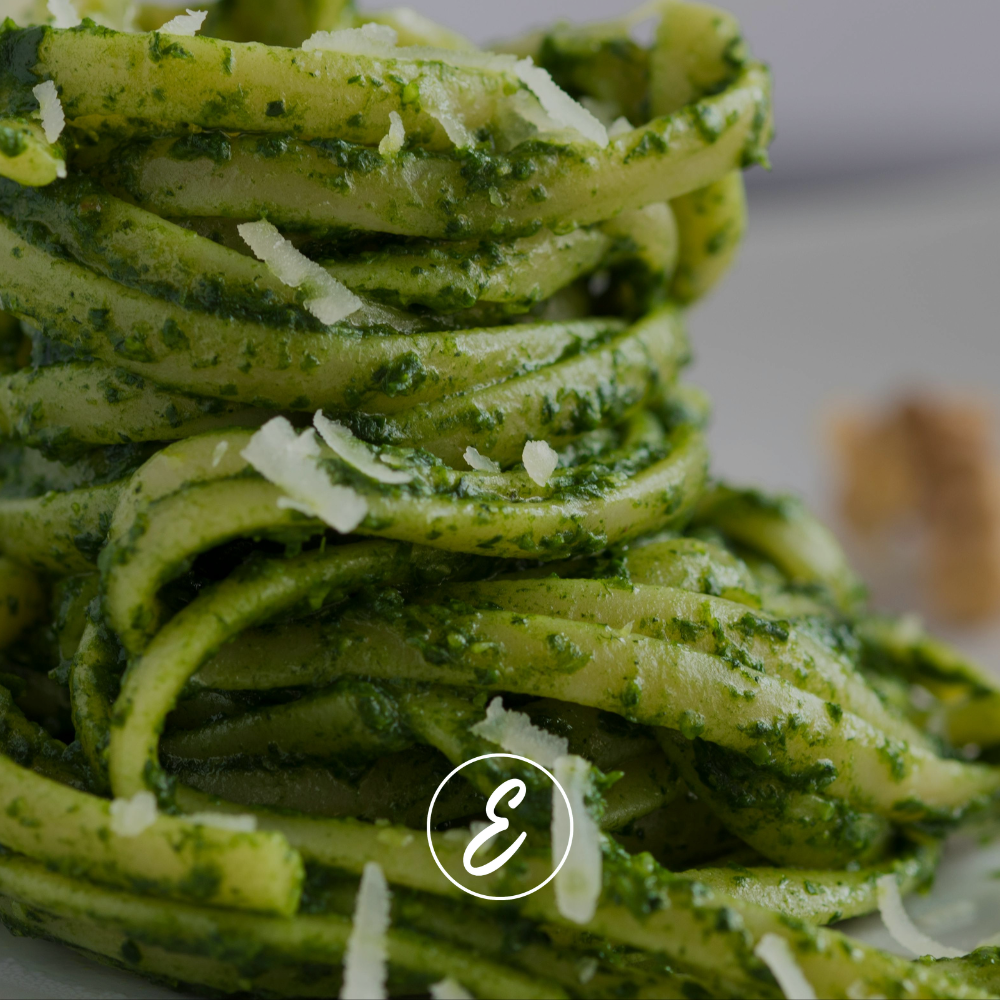
Kale and garlic pasta is one of those wonderfully simple meals that makes growing winter greens feel entirely worthwhile.
I first discovered the idea through a Nigella recipe, but—as happens with most recipes in my kitchen—it has gradually adapted to suit what is growing, what is in the cupboard and how many people need feeding.
I often make it with black Tuscan kale because it is one of my favourite varieties. However, any kale works in this dish.
Curly kale, red Russian, blue dwarf or whichever variety grows best in your garden can all be used. You can even combine several types when the garden gives you a handful of each but not quite enough of anything.
The kale is cooked until tender, blended with garlic, cheese and olive oil, then tossed through hot pasta with enough pasta water to create a silky green sauce.
It is warming, inexpensive and an excellent way to turn a substantial amount of winter greenery into a family dinner.
Easy Kale and Garlic Pasta
Serves: 4
Preparation time: 10 minutes
Cooking time: 20 minutes
Ingredients
- 300–350g fresh kale
- 400g pasta
- 2–3 garlic cloves, peeled
- 3 tablespoons extra virgin olive oil
- 60g finely grated Parmesan, plus extra to serve
- ½ teaspoon salt, or to taste
- Freshly ground black pepper
- Pinch of chilli flakes, optional
- Approximately ½–1 cup reserved pasta water
Method
- Bring a large saucepan of salted water to the boil.
- Remove the thick central stems from the kale and roughly tear or chop the leaves. Young, tender stems can be included, but older fibrous stems are better removed.
- Add the kale to the boiling water and cook for approximately 5–8 minutes, or until completely tender. Tougher kale varieties may need a little longer.
- Lift the cooked kale from the saucepan using tongs or a slotted spoon, leaving the water behind for the pasta.
- Add the pasta to the same water and cook according to the packet directions until al dente.
- Meanwhile, place the cooked kale, garlic, olive oil, Parmesan, salt, pepper and chilli flakes, if using, into a blender or food processor.
- Add approximately ½ cup of the pasta cooking water and blend until you have a thick, smooth green sauce. Add a little more water if needed.
- Before draining the pasta, reserve another cup of its cooking water.
- Return the drained pasta to the saucepan and add the kale sauce. Toss well over low heat, adding small amounts of reserved pasta water until the sauce loosens and coats the pasta.
- Taste and adjust the seasoning, then serve with extra Parmesan and black pepper.
Any Kale Really Does Work
Black Tuscan kale creates a deep green sauce and generally becomes tender quite quickly, but you do not need to grow a particular variety for this recipe.
Use whichever kale:
- grows well in your climate;
- survives the local wildlife;
- is currently abundant in your garden; or
- looks freshest at the greengrocer.
Curly kale may take slightly longer to soften, while young leaves will cook quickly. The important part is cooking the kale until properly tender before blending it. Half-cooked kale will produce a sauce with considerably more determination than silkiness.
You can also use a mixture of kale and other winter greens, such as spinach, silverbeet or beetroot leaves.
Can I Make It Without a Blender?
Yes. Finely chop the cooked kale and garlic, then stir them through the pasta with the olive oil, Parmesan and pasta water.
The result will be more rustic than creamy, but it will still taste lovely—and there will be one less appliance to wash.
Easy Additions
The basic pasta is satisfying on its own, but you can also add:
- toasted walnuts, pine nuts or breadcrumbs;
- crispy bacon or pancetta;
- cooked cannellini beans or chickpeas;
- sautéed mushrooms;
- peas;
- leftover roast chicken;
- ricotta or crumbled feta; or
- a fried or poached egg.
A generous spoonful of toasted breadcrumbs is particularly good when you have an unsuccessful sourdough loaf requiring a dignified second career.
What to Serve With Kale and Garlic Pasta
This is already a complete and comforting meal, so it does not need an elaborate accompaniment.
If you would like to add something, try:
- a simple tomato salad;
- roasted vegetables;
- crusty bread;
- cannellini beans; or
- a protein such as chicken, fish or tofu.
Storing and Reheating
Leftovers can be kept in a covered container in the fridge for up to three days.
Reheat gently with a splash of water to loosen the sauce. You can also add leftover pasta to a frittata rather than reheating it as it is.
The kale sauce can be prepared separately and refrigerated for up to three days. It may also be frozen in small portions, ready to stir through freshly cooked pasta.
From Winter Garden to Dinner
Winter greens deserve to be more than the virtuous vegetable sitting beside the meal.
In this pasta, kale becomes the sauce: rich, garlicky, comforting and substantial enough to carry the whole dinner.
Use black Tuscan kale if you have it—but any kale works. The best variety is ultimately the one that grows successfully in your garden and makes it into the kitchen before the rabbits find it.
For more ideas from the winter garden, read One Month of Winter to Go: What I’m Doing in My Frost-Prone Garden or try my Winter Green Giant Quiche.