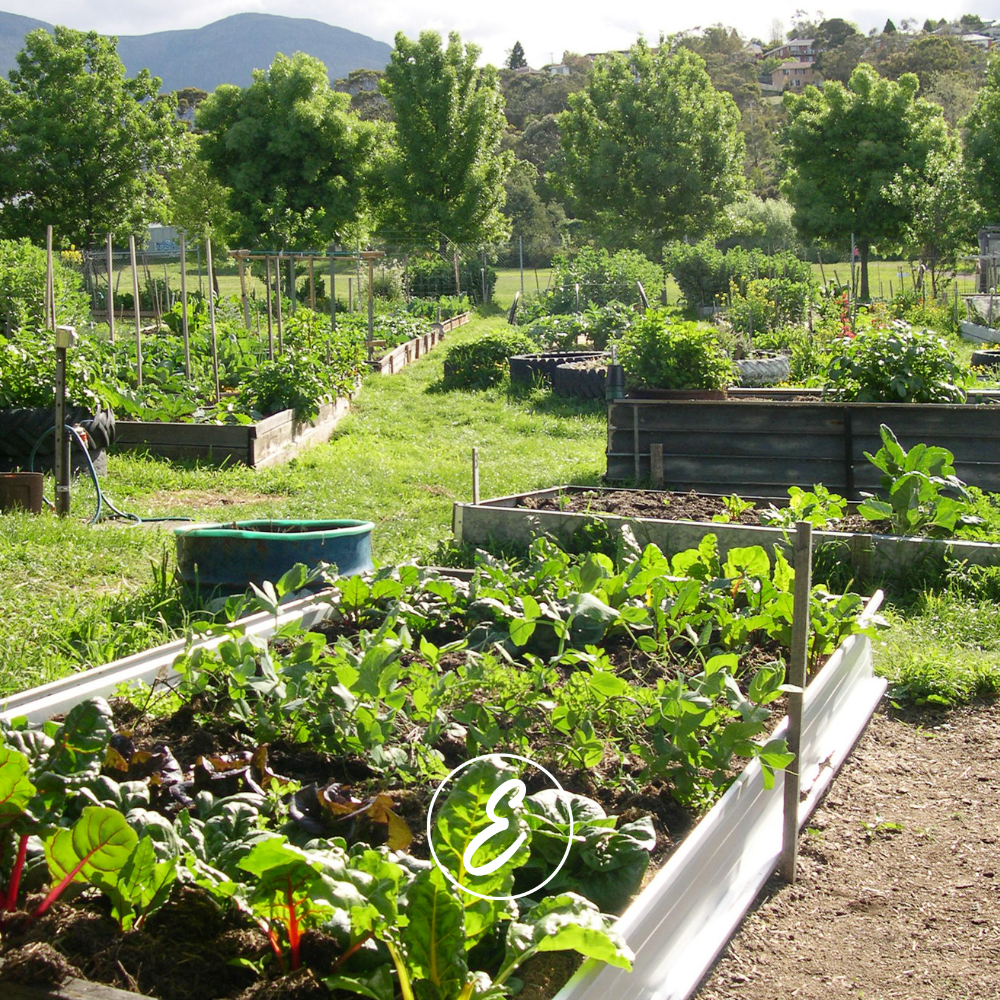
I’ve been thinking a lot about what food security actually looks like at household level.
Not complete self-sufficiency.
Not living off-grid with a cow, a wheat field and forty jars of something mysterious fermenting in the basement.
Just this:
If I had one productive acre and wanted it to contribute meaningfully to feeding my family, what would I grow?
Eventually I’ll have more than an acre available for the Mrs E garden.
But one acre is a useful exercise because it forces priorities.
What earns its space?
What do we actually eat?
What stores well?
What preserves well?
What comes back every year?
And what would still be useful if the supermarket remained conveniently open five minutes down the road?
Because food security isn’t about expecting disaster.
It’s about having more options.
First: I wouldn’t try to grow everything
Some foods make far more sense for me to buy.
I’m unlikely to devote valuable Southern Highlands garden space to growing enough wheat for flour, for example.
I’ll happily buy rice.
I’ll buy salt.
I’ll buy olive oil.
The goal isn’t independence from the food system.
It’s reducing how much our household depends on it for the foods I can grow well myself.
The one-acre priorities
If I were starting with one acre, I’d divide it roughly by purpose rather than drawing dozens of tiny crop zones.
1. Everyday vegetables
These deserve the largest share because they’re what disappear from the kitchen constantly.
I want:
- potatoes
- onions
- garlic
- leeks
- carrots
- tomatoes
- zucchini
- squash
- cucumber
- beans
- peas
- broccoli
- cauliflower
- cabbage
- leafy greens
- spinach/chard
- beetroot
- pumpkin
Not because they’re unusual.
Because we eat them.
Food security starts with food your family actually wants.
2. High-yield crops
Some plants give an enormous amount back for the space.
Think:
- zucchini
- climbing beans
- tomatoes
- cucumbers
- pumpkins
- potatoes
- leafy greens
These are particularly useful because surplus can become another product entirely.
Tomatoes become sauce.
Cucumbers become pickles.
Zucchini goes into fritters, sauces, baking and freezer meals.
Pumpkins store.
Beans freeze.
That’s the kind of productivity I want.
3. Perennials
This is where the garden gradually gets easier.
Once established:
- asparagus
- rhubarb
- herbs
- berries
- perennial onions where suitable
- fruit trees
- native edible plants
come back without starting from a seed packet every spring.
I’ll happily plant annual vegetables.
But long-term food resilience needs things that can look after themselves a little too.
4. Fruit & orchard food
I’d include:
- apples
- pears
- stone fruit
- citrus in suitable protected spots
- berries
- kiwi
- passionfruit
- perhaps nuts where climate and space allow
Fresh fruit is obvious.
But the real value comes from what surplus becomes:
- sauces
- jams
- chutneys
- frozen fruit
- dried fruit
- baking
- vinegars
- cordials
One harvest can feed several seasons.
5. Herbs, flavour and medicine-cabinet cooking
An enormous garden full of potatoes is useful.
It could also get very boring.
I’d grow plenty of:
- rosemary
- sage
- oregano
- thyme
- parsley
- coriander
- basil
- mint
- garlic
- chillies
plus edible natives suited to the property.
Herbs don’t take much space but radically expand what basic ingredients can become.
They’ll also eventually feed into Spice-E and the pantry side of Mrs E.
6. Storage crops
I’d deliberately grow food that doesn’t demand immediate attention at harvest.
That means things like:
- potatoes
- pumpkins
- onions
- garlic
- dried beans
- perhaps corn for drying where appropriate
Not everything needs to go through a preserving jar.
Sometimes good food security is simply food that sits quietly in a cool, dry place until you need it.
7. Food for preserving
Then I’d deliberately grow some excess.
Not accidental mountains of zucchini.
Planned surplus.
Tomatoes for sauce.
Cucumbers for pickling.
Herbs for drying.
Fruit for freezing.
Beans for preserving.
Chillies for sauces.
The point isn’t to preserve absolutely everything.
It’s to carry some of the productive season into the less productive one.
8. Protein around the acre
The acre itself doesn’t need to provide every source of protein.
But in our wider system I’d want:
Eggs from chickens.
Beans and lentils in the pantry.
Fish where appropriate in the broader farm plan.
And eventually our Speckle Park cattle have a completely different role in the farm business rather than simply filling our freezer.
The vegetable garden does not have to do every job.
That’s why I think in systems.
9. Pollinators and flowers still get space
Flowers aren’t wasted space.
I’d include them throughout the garden for:
- pollinators
- beneficial insects
- biodiversity
- cutting
- fragrance
- simply making the place lovely
If I have to spend hundreds of hours in a productive garden, I’d quite like it to be somewhere I enjoy being.
10. Seeds are part of the pantry
One of the things I want to build over time is a useful seed supply.
Not hundreds of novelty varieties.
Reliable things we actually grow.
Save seed where appropriate.
Keep backups.
Know which varieties thrive in our climate.
Because food resilience doesn’t begin only with what’s growing today.
It begins with the ability to grow again next season.
The greenhouse changes everything
In our climate, the greenhouse is an important part of the system.
It gives me somewhere to:
- start seedlings early
- protect tender plants
- extend the growing season
- grow crops that dislike our frost
- propagate
- keep a succession of plants moving
Which is why I don’t see the greenhouse as a luxury.
It’s productive infrastructure.
A one-acre garden still needs a pantry
This is where the whole Mrs E idea starts to join up.
Garden → pantry → kitchen → table.
Grow tomatoes.
Turn them into sauce.
Store the sauce.
Use it for pasta, pizza, shakshuka, soup and Bitsa dinners.
Grow pumpkins.
Store them.
Turn them into curry, soup, roast vegetables or pasta.
Grow herbs.
Dry them.
Use them all year.
The value isn’t simply what comes out of the soil.
It’s knowing how to use it.
My goal isn’t perfect self-sufficiency
It is resilience.
A productive garden.
A useful pantry.
Cooking skills.
Preserving skills.
Seeds.
A freezer.
A few animals.
And enough flexibility that if food gets expensive, life gets busy or a grocery shop doesn’t happen, the household doesn’t immediately fall apart.
That’s what food security means to me.
Not fear.
Capability.
And one productive acre can create an extraordinary amount of that.