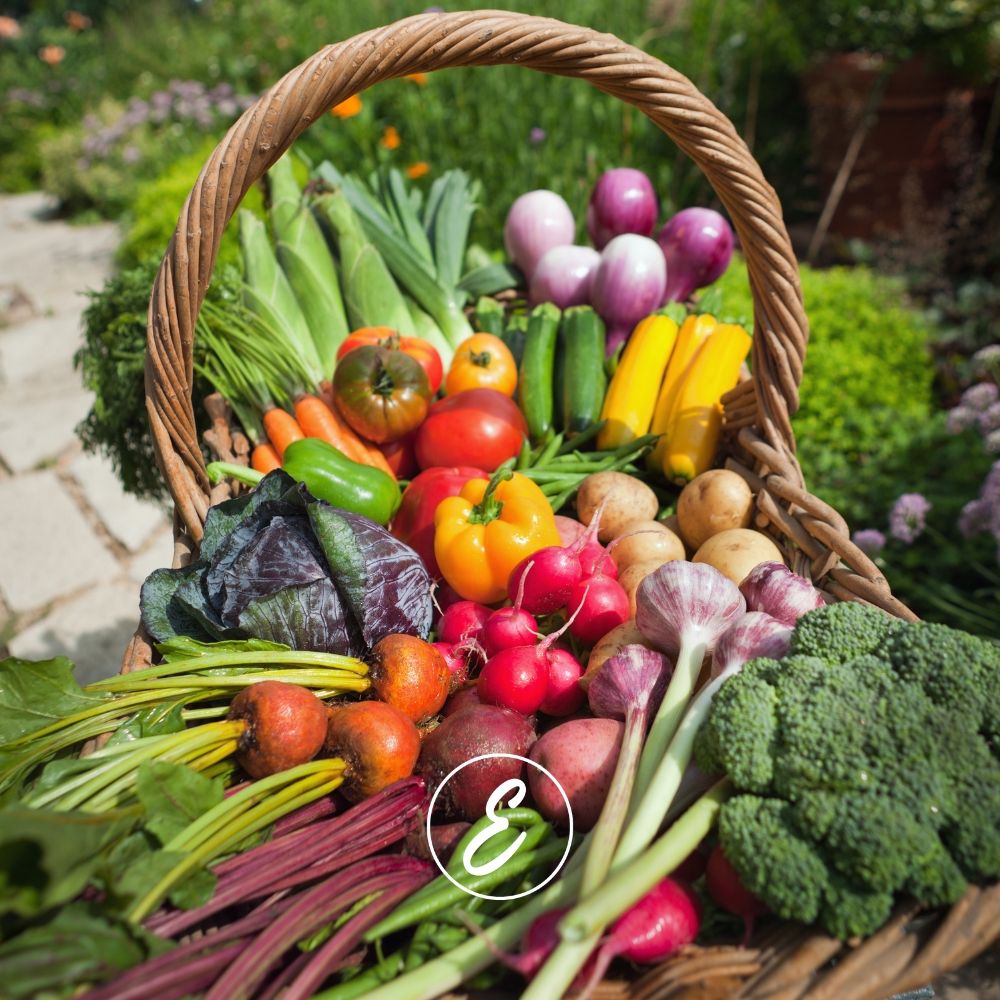
Why food resilience isn’t about stockpiling — it’s about making the food you buy, cook and grow work harder for your family.
When we talk about a resilient pantry, it’s easy to imagine shelves lined with preserving jars, bags of flour, dried beans and enough food to survive several months without visiting a supermarket.
And while there’s certainly a place for a well-stocked cupboard, that’s not where I think food resilience begins.
I think it starts with a much simpler question.
What does your family actually eat?
Because there’s little point growing twenty cabbages if nobody in the house likes cabbage. Or buying five kilos of dried chickpeas if you’ve never cooked with them and don’t particularly want to.
A resilient pantry isn’t necessarily the biggest pantry. It’s one that works for the people eating from it.
Start With Your Family’s Regular Meals
Before buying another bag of rice or planting another row of vegetables, think about the meals you cook most often.
Not the meals you imagine yourself cooking when life is wonderfully organised.
The real ones.
The pasta you make when everyone’s hungry. The fried rice that uses the vegetables left in the fridge. The soup that stretches across two lunches. The roast chicken that becomes sandwiches, stock and another dinner.
These meals tell you what your pantry needs.
If your family eats pasta twice a week, tomatoes, dried pasta, garlic, onions and a few freezer staples are probably more useful than an elaborate collection of ingredients you rarely touch.
If you regularly make curries, perhaps lentils, rice, spices and frozen vegetables deserve more space.
Build your pantry around your cooking habits, rather than trying to change your cooking habits to suit your pantry.
Think in Ingredients, Not Just Meals
One of the simplest ways to make food go further is to choose ingredients that can be used several ways.
Take a cauliflower.
It might become cauliflower cheese one evening, be roasted with spices for lunch, added to a curry or blended into soup.
A bag of carrots can go into a roast, a pasta sauce, a tray bake or a stockpot.
And a bunch of silverbeet might find its way into an omelette, pasta, soup or a side of sautéed greens.
This is the thinking behind my Bitsa Meals — a bit of this and a bit of that, brought together into something worth eating.
Rather than asking, What recipe do I need to shop for?, try asking:
What could I make with what I’ve already got?
It changes the way you see your fridge, freezer and cupboards.
The Freezer Is Part of Your Pantry
A resilient pantry doesn’t have to live entirely on shelves.
Your freezer can be one of the most useful tools in the kitchen, particularly when you’ve cooked too much, bought something in season or harvested more than you can eat.
Extra tomato sauce can become the base for another meal. Chopped herbs can be frozen for cooking. Vegetable scraps can be saved for stock, provided they’re clean and suitable.
And that extra portion of dinner?
That’s a future evening when you don’t have to start from scratch.
I like to think of the freezer as a little collection of favours you’ve done for your future self.
The trick, of course, is knowing what’s in there. A freezer full of unlabelled containers isn’t especially helpful.
Label things, date them and keep a simple list if you need to.
Grow What You’ll Actually Use
This is where the pantry and the garden begin to meet.
If you have room to grow food, even a few pots, start with ingredients you regularly buy.
Herbs are a wonderful example. Fresh thyme, rosemary, parsley or spring onions can make an ordinary meal feel entirely different, and you don’t need an acre to grow them.
For a family that eats plenty of greens, silverbeet or kale might be more valuable than a complicated crop that produces once and disappears.
If you make tomato sauce regularly, growing tomatoes specifically for cooking and preserving makes sense.
But if nobody likes beetroot, growing an enormous bed of it isn’t resilience. It’s creating another job.
The most useful garden is one that feeds the way you cook.
Build a Pantry That Changes With the Seasons
Food resilience doesn’t mean eating the same things all year.
In spring, you might be using tender greens, herbs and early vegetables.
Summer brings tomatoes, beans, zucchini and plenty of opportunities to freeze or preserve.
Autumn is a time for storing, cooking down and making the most of the harvest.
Winter is when those pantry and freezer habits really begin to pay off.
And you don’t have to grow everything yourself. Buying seasonal produce when it’s plentiful and affordable can be just as sensible as harvesting it from your own garden.
The aim is to make seasonal abundance useful beyond the day you bring it home.
Start Small. Build the Habit.
You don’t need to overhaul your kitchen this weekend.
Start with three things:
- Write down ten meals your family eats regularly.
- Identify the ingredients those meals have in common.
- Choose one ingredient you could use more efficiently — by freezing, preserving, growing or simply cooking it in several ways.
That’s the beginning of a resilient pantry.
Not rows of matching jars. Not an enormous shopping bill. Not a complicated system you abandon after a fortnight.
Just a kitchen that becomes a little easier to run, one meal at a time.
And if you’re thinking about growing more of your own food, the same principle applies outside.
Before you plan the garden, plan what you want it to feed.
Tomorrow, I’m taking that idea into the garden as we begin planning a productive one-acre food garden — from what to grow and how much, to making sure the space works for the family rather than becoming another full-time job.
Real Food Before Fads. Make the Next Meal Easier.