There’s something romantic about the idea of heading off-grid.
Minimalism. Fresh air. Slowing down. Cooking outside with ease, everything neatly planned and perfectly executed.
And then… reality arrives.
We’re currently on Day 6 of van life, with another 10 days still ahead of us, and let’s just say — it hasn’t quite gone to plan.
But in between the hiccups, there’s been something even better: simple food, real solutions, and a reminder that you don’t need perfect conditions to eat well.
The Reality Check (a.k.a. What Went Wrong First)
Let’s start with the honest version:
- The fridge/freezer broke… immediately
- The generator didn’t last long after
- Battery levels got uncomfortably low
- Our “induction-friendly” pans were… not induction-friendly
- And my husband’s water calculations were based on the wrong bucket size
Not quite the calm, effortless off-grid experience we had in mind.
But also — very real.
Adjusting Expectations (Quickly)
Here’s where things shifted.
We stopped trying to force the “perfect off-grid setup” and started working with what we actually had.
- Access to water (a big win)
- Local seafood nearby
- Enough power — if we’re careful
- A Weber that’s proving to be the most reliable thing we brought
Sometimes the trick isn’t doing it perfectly — it’s adjusting quickly and moving on.
What We Ate (And Why It Worked)
Good food has ended up being the easiest part — once we simplified things.
Fresh seafood (Good Friday)
We found oysters and beautiful prawns locally, which meant:
- No need for complicated prep
- Minimal cooking
- Maximum flavour
It’s a good reminder that when ingredients are fresh, you don’t need to do much at all.
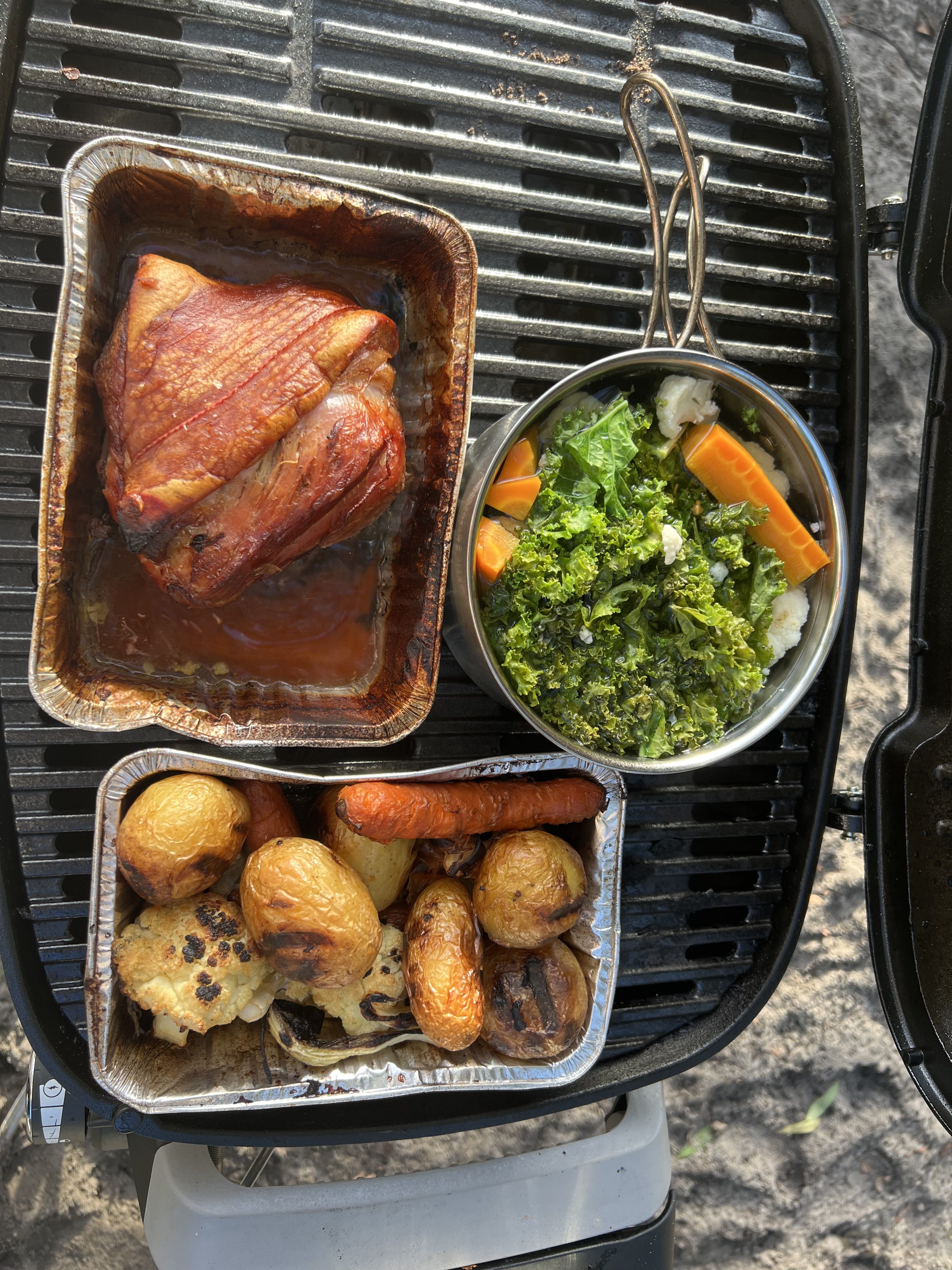
Easter Sunday roast… on a Weber
This was the highlight so far.
Despite everything else going wrong, we managed a full roast:
- Meat cooked low and slow
- Veg crisping up perfectly
- That proper “Sunday dinner” feeling, just in a slightly different setting
Proof that you don’t need a full kitchen to make something special.
What This Trip Is Teaching Me (So Far)
We’re only partway through, but a few things are already very clear:
1. You don’t need perfect conditions to eat well
If anything, limitations make things simpler.
2. Fresh food wins every time
If you can access good produce (or seafood), keep it simple.
3. Flexibility matters more than planning
Plans are great — until they don’t work. Being able to pivot quickly is far more useful.
4. “Off-grid” doesn’t have to mean all or nothing
There’s a middle ground, and that’s often where things actually work.
What I’d Do Differently (Already)
And yes — lessons have been learned:
- Double-check equipment properly (especially cookware)
- Overestimate water needs (significantly…)
- Plan more no-power meal options
- Always have one reliable cooking method (Weber has been our MVP)
Where to From Here
We’ve still got another 10 days on the road, so I’ll be sharing a few more updates as we go — including what’s working, what’s not, and the meals that are getting us through without overcomplicating things.
Because if there’s one thing this trip is proving, it’s this:
You don’t need everything to go right to still eat well and enjoy the experience.
Final Words
If you enjoy simple, adaptable meals like this — the kind that work whether you’re at home, travelling, or somewhere in between — I share plenty of them over at At Home with Mrs E, along with practical ways to feed your family without overthinking it.